


In the spring we watch summer migrant species as the Lesser Kestrel (Falco naumanni), the Montagu’s Harrier (Circus pygargus), the Roller (Coracias garrulus) and the Greater Short-toed Lark (Calandrella brachydactyla) arrive, choosing the quiet of the Alentejo plains to breed. Also easy to identify there is the colorful Bee-eater (Merops apiaster), that feeds on insects caught in flight, and the Woochat Shrike (Lanius senator) perched in poles, fences or on tree tops and shrubs.
During the winter there are important densities of winter migrant birds as the Crane (Grus grus), the Northern Lapwing (Vanellus vanellus), the European Golden Plover (Pluvialis apricaria) and the Eurasian Skylark (Alauda arvensis), that invade the fields in search for food and shelter.
There are also birds of prey as the Hen Harrier (Circus cyaneus) and the Red Kite (Milvus milvus), flying over plain and open areas seeking for prey.
Fallow lands are important feeding areas for a set of large birds of prey as the emblematic Black Vulture (Aegypius monachus), the Griffon (Gyps fulvus), the Iberian Imperial Eagle (Aquila adalberti), the Golden Eagle (Aquila chrysaetus) and the Bonelli’s Eagle (Aquila fasciata).


STATUS OF CONSERVATION:
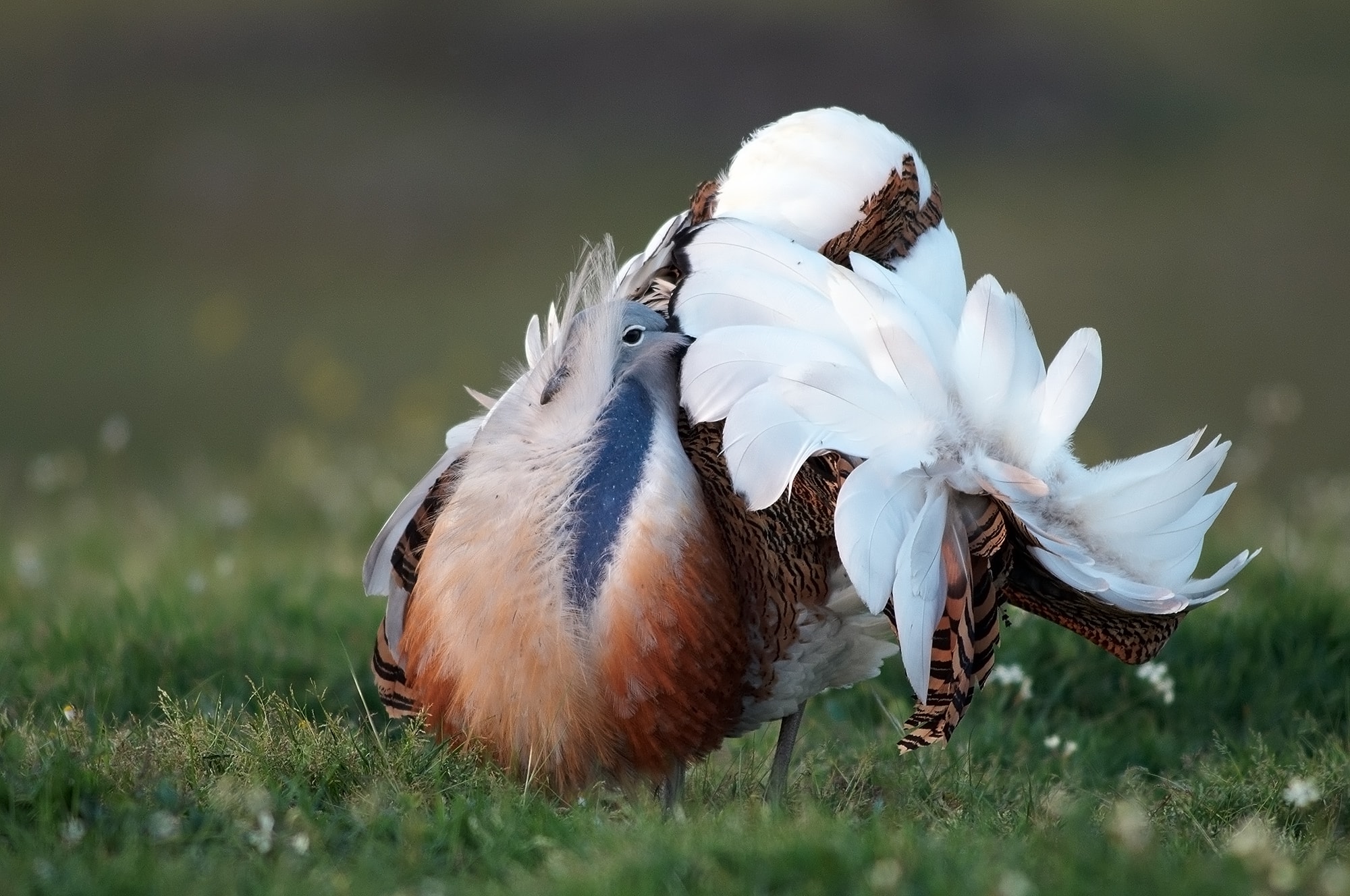
NAME SCIENTIFIC: Otis tarda
ORDER: Gruiformes
FAMILY: Otitídeos
DIMENSIONS: Wingspan: 210-240 cm, Length: 90-105cm
OCCURRENCE IN CASTRO VERDE: Resident
GENERAL DISTRIBUTION:
It owes its name to the fact that it is slow, heavy and that it "takes" to take flight. The male that reaches 16kg is the 2nd heaviest flying bird in the world and the heaviest flying bird in Europe. Known as the "queen" of the steppe, it is the most emblematic of the birds that live in the cereal steppe of Castro Verde.
Almost the size of a peru but taller, it has a thick and long neck, a strong chest, long wings and a remarkable tail. The male has "mustaches" and a dark brown "collar", well visible in the spring, and is larger and heavier than the female.
Although it forms flocks (of males or females), for most of the year, with the brown color and the habit of walking on the ground, it is seldom observed.
With spring males make exuberant bridal parades to attract females. They inflate the air sacs of the neck, drag the wings and open the tail "fan", turning into authentic "balls" of white feathers. Females visit these areas by selecting a male to mate.
After all the ritual, the females incubate the eggs and take care of the babies alone.
STATUS OF CONSERVATION:
SCIENTIFIC NAME: Burhinus oedicnemus
ORDER: Charadriiformes
FAMILY: Burhinidae
DIMENSIONS: Wingspan: 76-88 cm, Length: 38-45 cm
OCCURRENCE IN CASTRO VERDE: Resident
GENERAL DISTRIBUTION:
Its name comes from the Arabic word "algaravão", which means "bird of the sunset", and reflects the period of greater activity that is at the end of the day, just before the sun sets.
Although it is a barnacle bird rarely appears near water, being essentially terrestrial. During spring, it appears isolated or in pairs, but in winter it can form flocks with tens or hundreds of individuals.
Its feathered plumage in shades of brown gives it an excellent camouflage, which allows it to pass easily unnoticed in the landscape. The whistling call is the main sign of his presence.
His large yellow eyes are an adaptation that gives him a better view during his period of greater activity, the twilight.


STATUS OF CONSERVATION:
SCIENTIFIC NAME: Motacilla alba
ORDER: Passeriformes
FAMILY: Motacillidae
DIMENSIONS: Length: 16-19cm
OCCURRENCE IN CASTRO VERDE: Resident and Wintering
GENERAL DISTRIBUTION:
This elegant bird is quite easy to identify by the typical dark pattern on the head, throat and back, which contrasts with the white of the chest, abdomen and facial mask.
The tail and long legs are quite visible, especially when walking on the ground, while shaking his head to the rhythm of the past.
The riverside areas and plowed grounds, parks and gardens, are their places of choice.
Also in the small localities is easily sighted, mainly where there is a strong presence of cattle and small waterways that cross them.
Common in the northern half of Portugal, where it is present throughout the year, in Castro Verde is easier to be observed between October and March.
STATUS OF CONSERVATION:
SCIENTIFIC NAME: Saxicola torquatus
ORDER: Passeriformes
FAMILY: Muscicapidae
DIMENSIONS: Length: 11-13cm
OCCURRENCE IN CASTRO VERDE: Resident
GENERAL DISTRIBUTION:
It is one of the first passeriformes to begin, in Portugal, its breeding season.Soon in January the male begins his monotonous "cantiga" of love, always from the same poisons.This small insectivore is also one of the birds easier to observe, especially in the case of the male, due to its orange breast and black head, quite visible when perching on poles and fences.
STATUS OF CONSERVATION:
SCIENTIFIC NAME: Ciconia ciconia
ORDER: Ciconiiform
FAMILY: Ciconiidae
DIMENSIONS & WEIGHT: Wings 180-218cm, Length: 95-110cm
OCCURRENCE IN CASTRO VERDE: Resident (the population being reinforced in the spring with the arrival of some migrating summer nesting birds)
GENERAL DISTRIBUTION:
Once a little abundant bird is quite common nowadays.
With its plumage in black and white tones and a long orange beak this bird is unmistakable.
In flight stands out for carrying the right neck and the long legs stretched back.
Its best known sound is the beak of the beak that it does mainly when they are in the nest.
Although it is a migratory bird, in the South of Portugal there are several resident populations. Castro Verde is one of the places that has a greater number of individuals who stay here all year round.
The best time to observe it is during spring, when the nests are busy.
In the plains of Castro Verde the nests are made in poles along the roads and in tall trees, being possible to observe the chicks easily during the spring and summer.
STATUS OF CONSERVATION:
SCIENTIFIC NAME: Pterocles orientalis
ORDER: Pteroclidiformes
FAMILY: Pteroclididae
DIMENSIONS: Length: 30-35cm
OCCURRENCE IN CASTRO VERDE: Resident
GENERAL DISTRIBUTION:
Short-haired and short-legged, it is a small bird that exhibits a pigeon-like flight.
Brownish in color and spending most of the time on the ground, it is rarely seen. But in flight it is easily identified by the black in its belly.
In the Iberian Peninsula it is connected to the cereal fields, where it prefers to walk by naked and stony soils or that do not have much vegetation and that are near places with water.
In summer they often make great distances to the few points with water to drink. By soaking the feathers of the breast, the adults can carry water to the nest to refresh the eggs and give their babies water to drink. By this time they are easier to observe in the morning when moving to the water points.
STATUS OF CONSERVATION:
SCIENTIFIC NAME: Athene noctua
ORDER: Strigiformes
FAMILY: Strigidae
DIMENSIONS: Wingspan: 50-57cm, Length: 23-27cm
OCCURRENCE IN CASTRO VERDE: Resident
GENERAL DISTRIBUTION:
It is the nocturnal bird of prey easier to observe, due to the partially diurnal habits.
The rounded silhouette, brown plumage with white knits and yellow eyes make it easier to identify.
The habit of landing at high points, such as poles, fences, often by the roadside, also helps your observation.
Their vocalizations (a full and melodious song "goooek") are very audible, especially during the spring when they are delimiting their territories.
By now, its common name reflects the small size, because "Galician" is also used to refer to smaller varieties of agriculture.
STATUS OF CONSERVATION:
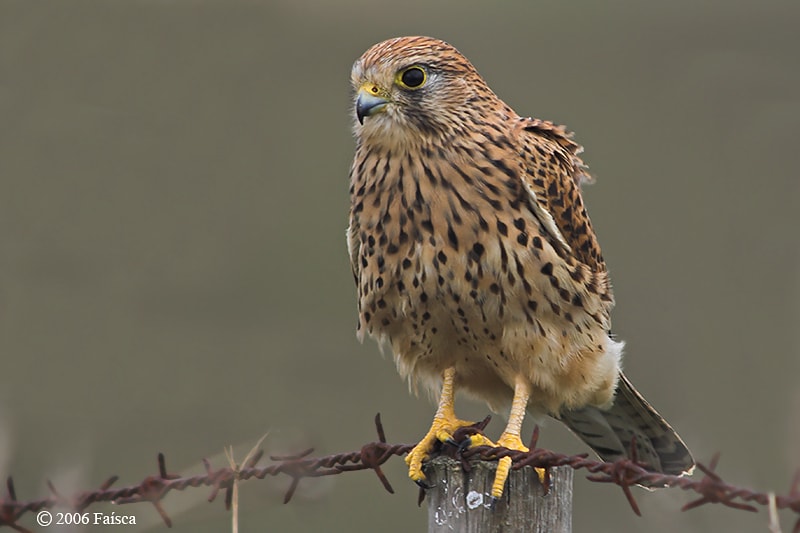
SCIENTIFIC NAME: Falco tinnunculus
ORDER: Falconiformes
FAMILY: Falconidae
DIMENSIONS: Wingspan: 68cm-78cm, Length: 31-37cm
OCCURRENCE IN CASTRO VERDE: Resident
GENERAL DISTRIBUTION:
It is the most abundant falcon in Portugal and one of the most common daytime birds of prey in Europe.
To seek prey on the ground, it is often seen almost motionless in the air with fast wing beats. This type of flight is called "sifting" and is at the origin of its common name.
Although its high number and in some areas give the impression of creating in colonies, it is a territorial bird and that fights for the dominion of its space against individuals of the same species.
To reproduce it uses cavities in cliffs but also human structures like buildings and monuments, being frequently sighted in cities.
STATUS OF CONSERVATION:
SCIENTIFIC NAME: Alectoris Rufa
ORDER: Galliformes
FAMILY: Phasianidae
DIMENSIONS: Length: 32-35cm
OCCURRENCE IN CASTRO VERDE: Resident
GENERAL DISTRIBUTION:
It is a terrestrial bird of rounded appearance, with feet and red beak.
It can be observed in large flocks, especially at the end of winter, which are broken in early spring.
He has in mimetism his greatest defense, both in the case of adults and of the perdigotos, and generally does not use the flight like means of escape, preferring to run and to hide.
Short and heavy, flight is usually used as a last resort to escape, flying a few meters to an area with denser vegetation where it can be hidden.
It is a much hunted species, mainly in the Iberian Peninsula.
STATUS OF CONSERVATION:
SCIENTIFIC NAME: Upupa epops
ORDER: Coraciiformes
FAMILY: Upupidae
DIMENSIONS: Wingspan: 44cm-48cm, Length: 25-29cm (including 4-5cm beak)
OCCURRENCE IN CASTRO VERDE: Resident (the population being reinforced in the spring with the arrival of some migrating summer nesting birds)
GENERAL DISTRIBUTION:
The scientific name originates in its singing that is heard at long distances and consists of a muffled "uup-uup-uup".
With a black and white pattern on the wings and a hoop, which when opened seems like a fan, it is the most peculiar birds of Portugal.
The fluttering, undulating flight resembles an enormous butterfly. When he lands he raises the hoop for a moment.
Suspicious, she spends some of her time feeding on the soil, where her tapering, arched beak allows her to find insects and their larvae, as well as worms. Their diet includes several species considered as pests such as the processionary caterpillar an important pest of pine forests.
Part of the population is in Portugal all year round (in the Algarve and Alentejo) while another party migrates to Africa in late fall returning the following spring to reproduce.
In Castro Verde, the spars are sedentary, which means they can be observed all year round in this area.
STATUS OF CONSERVATION:
SCIENTIFIC NAME: Tetrax tetrax
ORDER: Gruiformes
FAMILY: Otididae
DIMENSIONS: Wingspan: 83-91cm, Length: 40-45cm
OCCURRENCE IN CASTRO VERDE: Resident
GENERAL DISTRIBUTION:
It is of the family of the Bustard but smaller, having the approximate size of a chicken.
With gregarious habits, it forms quite numerous bands.
In flight both sexes show a white spot on the wings and so are easy to spot.
When flying, the males emit a characteristic "ssississi", due to the passage of air through one of the feathers of the wings that is shorter and thinner than the others. This hissing sound will have originated his name.
In spring males abandon their flocks and establish territories where they perform bridal displays to attract females and mate. At this point they have a black and white "collar" that disappears for the rest of the year.
During the exhibits, the male stretches with his tail raised and every 8-10 seconds he shoots the neck back while issuing a dry prrrt. This typical call often makes its presence felt before it is well camouflaged in the Alentejo landscape. This vocalization is often accompanied by a characteristic "tap", which together are irresistible to females.
STATUS OF CONSERVATION:
NAME SCIENTIFIC: Emberiza calandra
ORDER: Passeriformes
FAMILY: Emberizidae
DIMENSIONS: Length: 16-19cm
OCCURRENCE IN CASTRO VERDE: Resident
GENERAL DISTRIBUTION:
With its unmistakable song, it is one of the most common species in the plains of Castro Verde.
A little larger than a Sparrow, it is distinguished by the thick beak, the stripes on the chest, the pink legs and, above all, the metallic corner, monotonously repeated, rough and accelerating.
It flies frequently with its legs hanging (ie down) and has the habit of landing on fence posts and telephone wires singing, thus marking its territory.
Outside the nesting season, individuals flock together in search of food.
With a seed-based diet, he has a "tooth" in the beak that he uses to break the beans, his name being related to what he likes to eat: wheat seeds and other cereals.
STATUS OF CONSERVATION:
SCIENTIFIC NAME: Falco naumanni
ORDER: Accipitriformes
FAMILY: Falconidae
DIMENSIONS: Wingspan: 63cm-72cm, Length: 27-33cm
OCCURRENCE IN CASTRO VERDE:
GENERAL DISTRIBUTION:
It owes its name to being able to sift through the air (hover over the same spot with quick flutter of wings) and nest in man-made structures (such as church towers, abandoned rural hills, towers and nesting walls).
The plumage is distinct between males and females and very similar to that of the Common Kestrel. However, males have a bluish-gray list on the back and wings, and the dorsum flat with no black spots.
Considered, in the past, one of the most common birds in Europe, this small migrating falcon suffered in the 18th century. XX a strong population decline, having been extinguished in several countries.
In Portugal it is present only in spring, nesting mainly in the Baixo Alentejo. Castro Verde is the place where more individuals occur and the largest colonies of the species in the country.
The colonies can reach up to hundreds of couples, who take advantage of the cavities of human structures as a nest.
Their food is almost exclusively from large insects, although it can also hunt small field mice and geckos.
STATUS OF CONSERVATION:
SCIENTIFIC NAME: Alcedo atthis
ORDER: Coraciiformes
FAMILY: Alcedinidae
DIMENSIONS: Length: 17-19cm (including 4cm beak)
OCCURRENCE IN CASTRO VERDE: Resident
GENERAL DISTRIBUTION:
This small water bird is one of the most colorful and enchanting species of the Portuguese avifauna.
When it is resting, it can be easily recognized by the back and the blue wings and by the chest and belly of orange.
It is often detected when it flies over the surface of the water.
To hunt, you often land on small poles or dry branches by the water to locate prey. Then he dives head first to catch them.
To prevent predators, nests are tunnels dug along the banks of waterways. With a few meters of depth, at the end of the tunnel there is a chamber with a heap of fish bones.
STATUS OF CONSERVATION:
SCIENTIFIC NAME: Calandrella brachydactyla
ORDER: Passeriformes
FAMILY: Alaudidae
DIMENSIONS: Length: 14-16cm
OCCURRENCE IN CASTRO VERDE:
GENERAL DISTRIBUTION:
It is a migratory species, which arrives in late March and departs in September. At the end of the summer it sometimes forms flocks with many dozens of individuals.It has a light brown plumage, with no marks on the chest.When he sings, this little lark sometimes flies to a considerable height. Discovering a flying slipper can be a real challenge, even for experienced ornithologists.At breeding season the male digs a pit near the nest, using it to sleep or in case of bad weather. It may have a second posture, making for this a new nest sometimes very close to the first nest. In the second posture, you can use the pit of the first nest to sleep.After the pups reach adulthood, they and the females leave the nests and make pits nearby to shelter and sleep.
STATUS OF CONSERVATION:
SCIENTIFIC NAME: Coracias garrulus
ORDER: Coraciiformes
FAMILY: Coraciidae
DIMENSIONS: Wingspan: 52-57cm, Length: 29-32cm
OCCURRENCE IN CASTRO VERDE:
GENERAL DISTRIBUTION:
It is a recent species in Portugal, with no references to its presence in the first decades of the twentieth century.
Today it has a very fragmented distribution, occurring mainly in Castro Verde, where it comes every year to reproduce.
It is one of the most colorful birds of the Portuguese fauna.
But, despite its strong blue and reddish brown coloring hardly go unnoticed by any observer, this bird is little known for its rarity.
It has a dimension between a Gaius and a Pigeon and it is not possible to distinguish the males from the females. Likes to land on fencing poles where he observes what goes around and on the ground to be able to hunt.
It makes the nest in hollows of trees or of human structures, being able to even share colonies with the Kestrel-of-towers.
STATUS OF CONSERVATION:
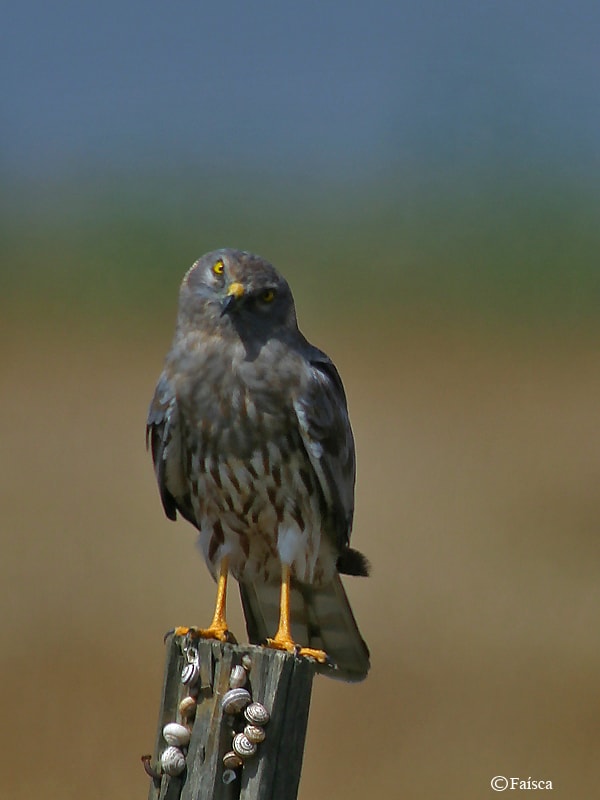
SCIENTIFIC NAME: Circus pygargus
ORDER: Accipitriformes
FAMILY: Accipitridae
DIMENSIONS: Wingspan: 96cm-116cm, Length: 39-50cm
OCCURRENCE IN CASTRO VERDE:
GENERAL DISTRIBUTION:
It occurs in Portugal during the spring and summer, then migrates to Africa where it passes the winter.
He executes juggling flights in his elaborate wedding parades in flight, being considered a virtuoso acrobat, fully justifying the name Lineu attributed to him: Circus.
Its smooth and harmonious flights, accompanying the rolling of the fields, are indeed a must-see spectacle.
Males are gray, while females are brownish.
A major threat to this prey is the destruction of nests in the fields by agricultural machinery when harvesting the cereal.
STATUS OF CONSERVATION:
SCIENTIFIC NAME: Vanellus vanellus
ORDER: Charadriiformes
FAMILY: Charadriidae
DIMENSIONS: Wingspan: 67-72cm, Length: 28-31cm
OCCURRENCE IN CASTRO VERDE: Wintering
GENERAL DISTRIBUTION:
Between October and January, it is common to see flocks of many hundreds of individuals, sometimes in conjunction with the Golden Plover.
It is one of the most emblematic birds that come to spend the winter to the cereal steppe.
It has a characteristic sparing, identifying species.
When on the run, he emits extremely characteristic, lament-like vocalizations.
Its plumage in the distance seems black and white but a closer observation reveals greenish and purple hues on the back. This pattern, rather long legs and facial white patches allow it to be distinguished from other waders.
STATUS OF CONSERVATION:
SCIENTIFIC NAME: Grus grus
ORDER: Gruiformes
FAMILY: Gruidae
DIMENSIONS: Wingspan: 180-222 cm, Length: 96-119cm
OCCURRENCE IN CASTRO VERDE: Wintering
GENERAL DISTRIBUTION:
With high legs and long neck, it is the size of a White Stork.
Comes from northern Europe to spend the winter in the Iberian Peninsula.
During the day it is seen in small groups mainly in areas of mount, where it feeds on acorns.
In his gray body stands an enormous tuft of feathers on the tail. The head pattern is black, white and with a small red spot on the top.
In flight the enormous neck protrudes, which is kept stretched.
At the end of the day it is easily seen in flocks of hundreds of individuals describing lines in the sky in a "V" shape, while emitting their distinctive and distinctive trumpet sound.
These trips to the places where they will spend the night (dams and dams) are one of the most extraordinary spectacles in the Alentejo in winter.
STATUS OF CONSERVATION:
SCIENTIFIC NAME: Milvus milvus
ORDER: Accipitriformes
FAMILY: Accipitriformes
DIMENSIONS: Wingspan: 140-165cm, Length: 61-72cm
OCCURRENCE IN CASTRO VERDE: Wintering
GENERAL DISTRIBUTION:
It is a medium-sized prey bird with a clear head and a pattern in the body of brownish and reddish hues.
The tail is bifurcated and so is also called "cod-kite".
Its once widespread distribution is now restricted to Europe, North Africa and the Middle East.
The birds that are observed in Castro Verde belong to the populations of Northern Europe that come to spend the winter to the Iberian Peninsula.
During the day they are easily identified by the calm flight, white "windows" on the underside of the wings and the tail to serve as a rudder.
It is an expert glider being frequently observed to fly in a circle in the thermal currents.
In the late afternoon they join together in small groups to spend the night in tall trees (dormitories).
STATUS OF CONSERVATION:
SCIENTIFIC NAME: Pluvialis apricaria
ORDER: Charadriiformes
FAMILY: Charadriidae
DIMENSIONS: Wingspan: 53-59cm, Length: 25-28cm
OCCURRENCE IN CASTRO VERDE: Wintering
GENERAL DISTRIBUTION:
It is especially abundant, in Portugal, between the months of November to February. At the end of the winter it migrates to the North of Europe where it reproduces.
His "sad whistle" is often the first sign of his presence.
It is distinguished mainly by the brownish plumage with white spots, by the thick and short beak and by the black legs.
The open lands and flats are the best places to look for this species, to feed on flocks.
It is worth looking at the flocks of Abibes, to which the Golden Plover is often associated.
It can still be seen to feed on moonlit nights.


CEAVG - Centro de Educação Ambiental do Vale Gonçalinho
(LPN - Liga para a Protecção da Natureza)
Apartado 84
7780-909 Castro Verde
Contacts
PH.: 286 328 309 / 286 322 246 / 968 523 648
Fax.: 286 328 316
E-mail: lpn.cea-castroverde@lpn.pt
GPS Coordinates: Latitude - 37°44´11.03"N; Longitude - 8°1´53.79"W
Working hours
Tuesday to Saturday, from 9h to 13h and from 14h to 18h.
Closed on Sundays, Mondays and Holidays.
 HOW TO GET THERE







Collaborate with us

Follow us on Social Networks


