


Among the herpetofauna, some species endemic to the Iberian Peninsula should be mentioned: the Bedriaga’s skink, the Iberian midwife toad and the Iberian painted frog. There are also species endemic to the Mediterranean region as is the case with the Mediterranean turtle. There are also the European pond turtle – classified as Endangered – and the Mediterranean house gecko – conservation status Vulnerable.
Even though they are not threatened in Portugal, reptiles as the ocellated lizard, the horseshoe whip snake and the false smooth snake – one of the rarest and least known ophidians in Portugal – are also present.
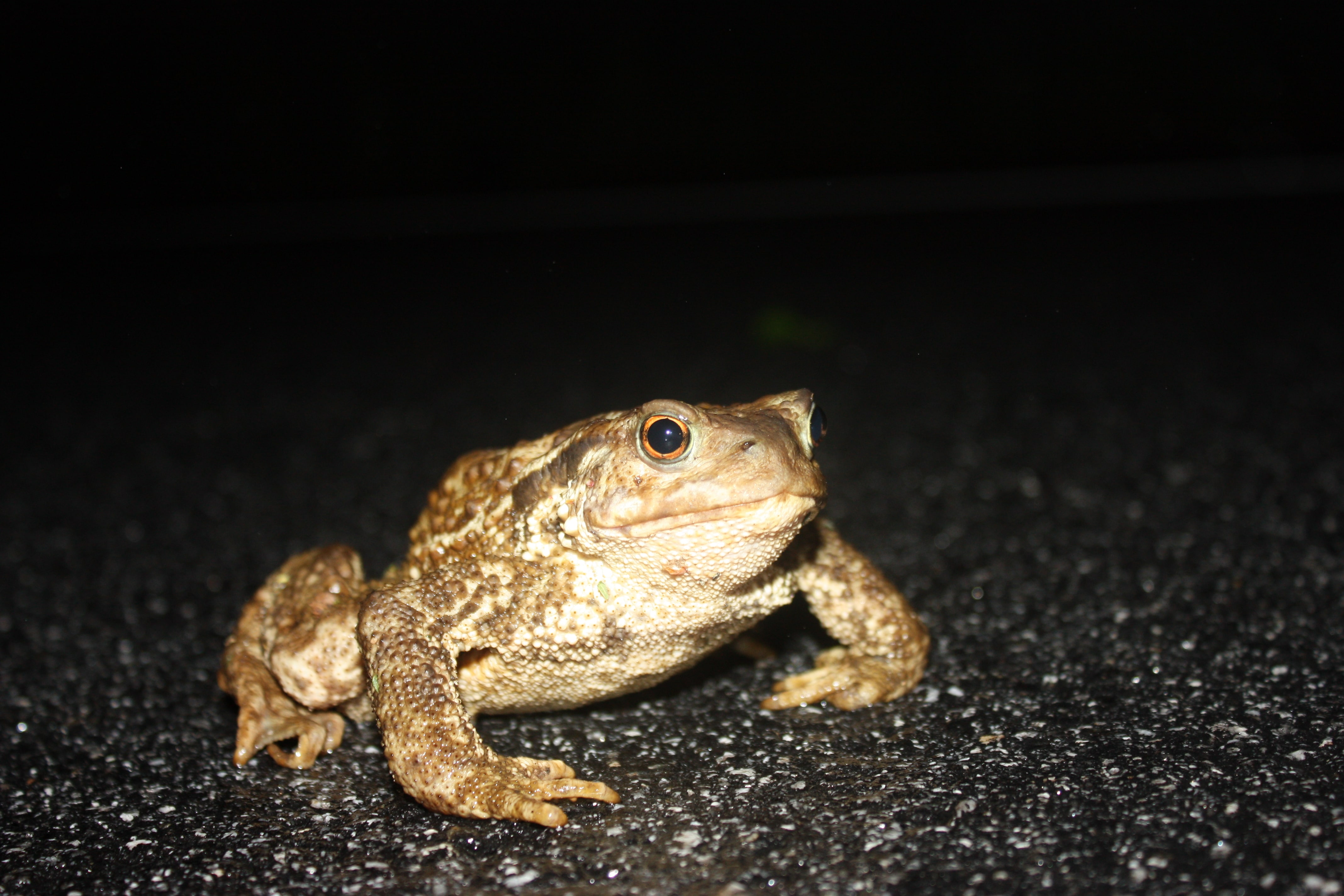
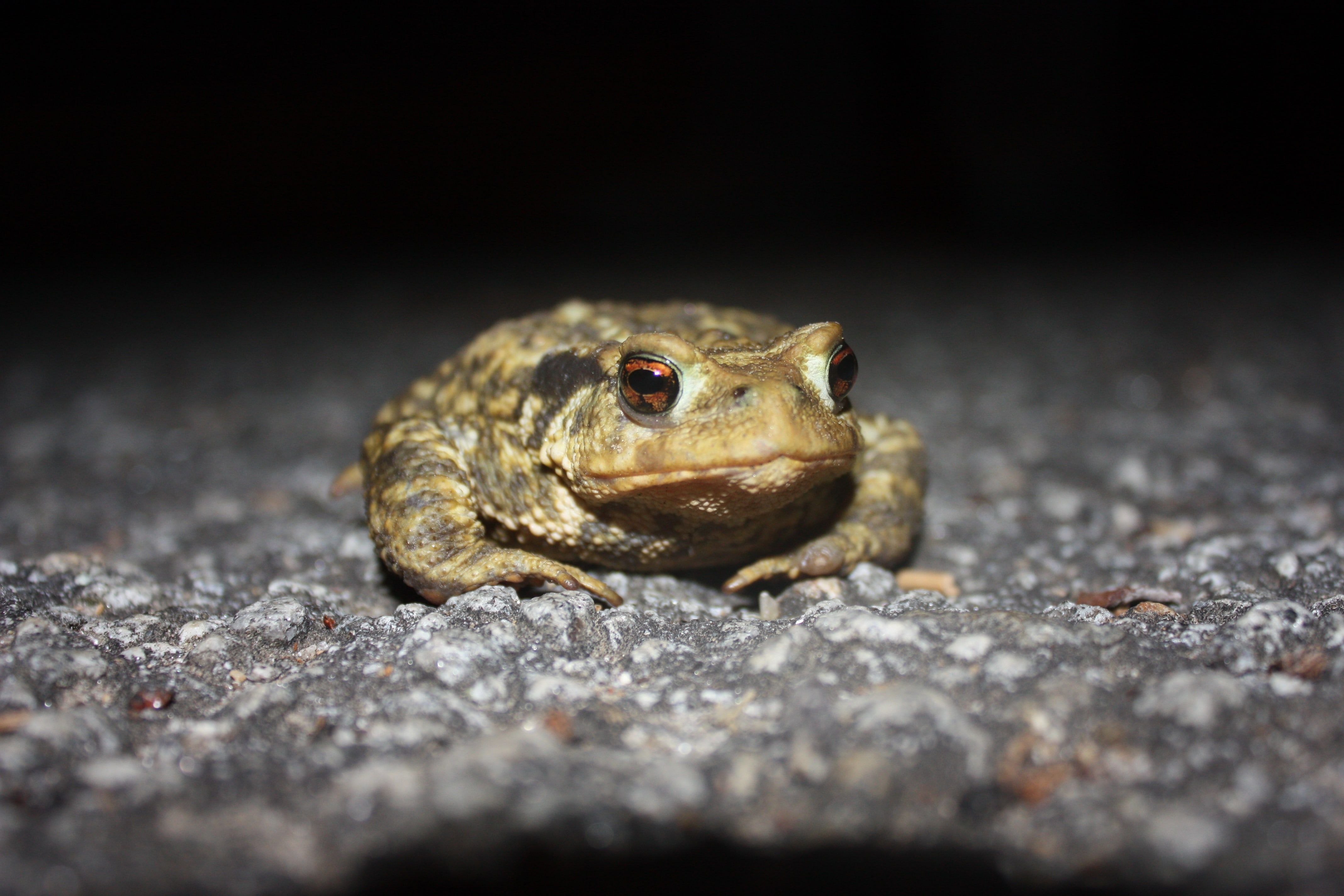
Among the amphibians there are species as the Iberian ribbed newt, the marbled newt, the Iberian spadefoot toad and the common parsley frog. Although rarer in this arid area, there are also the common toad and the natterjack toad. The presence of the Mediterranean tree frog and the Iberian water frog is revealed by the numerous and rather audible choirs they make in the spring.


STATUS OF CONSERVATION: Little Concern (LC)
SCIENTIFIC NAME: Mauremys leprosa
ORDER: Testudines (Chelonia)
FAMILY: Bataguridae
DIMENSIONS: Length: maximum sizes of males and females, are respectively 18.9cm and 21.2cm
GENERAL DISTRIBUTION It is distributed throughout Southwest Europe (Portugal, Spain and South West France) and North West Africa.
Also known as Tortoise-Mediterranean, it can live up to 35 years!
Females are larger than males. The carapace is oval, greenish gray or brown with light and diffuse spots.
To regulate the internal temperature you need to move to places with good sun exposure, but also with some aquatic vegetation to provide shelter.
Of daytime habits, in the cooler zones it enters hibernation and, in the zones warmer, it stays active all the year. In the hottest months, you may be inactive by burying yourself in the bottom of the body of water where you live.
With a diet based on algae, aquatic plants, invertebrates, amphibians (larvae and adults) and fish, this is an important prey for various animals, such as Otter, Fox and other carnivores, as well as for birds such as herons, storks and Prey
STATUS OF CONSERVATION: Little Concern (LC)
SCIENTIFIC NAME: Natrix maura
ORDER: Squamata
FAMILY: Colubridae
DIMENSIONS: Length: 65-130cm
GENERAL DISTRIBUTION: It is present in the Iberian Peninsula, Balearic Islands, Central and South of France, Southwest of Switzerland, Northwest of Italy, Corsica, Sardinia and North Africa.
In Portugal it is distributed throughout the territory.
It is a species with amphibian habits, shifting easily on land as well as in water, where nothing to the surface.
Females are more robust and reach larger sizes, while males have proportionally longer tails. It reaches 2 m in length but generally does not exceed 1.20 m and can live up to 20 years!
To defend himself, he assumes a posture that resembles a viper. It expands the head so that it looks triangular (like the one of the vipers), emits hisses and threatens to bite. This behavior (and the zig-zag pattern on the back) is thus at the origin of its common name.
It is active practically all the year, hibernating between November and February. It has daytime habits but in the summer it can have a twilight and nocturnal activity.
STATUS OF CONSERVATION: Little Concern (LC)
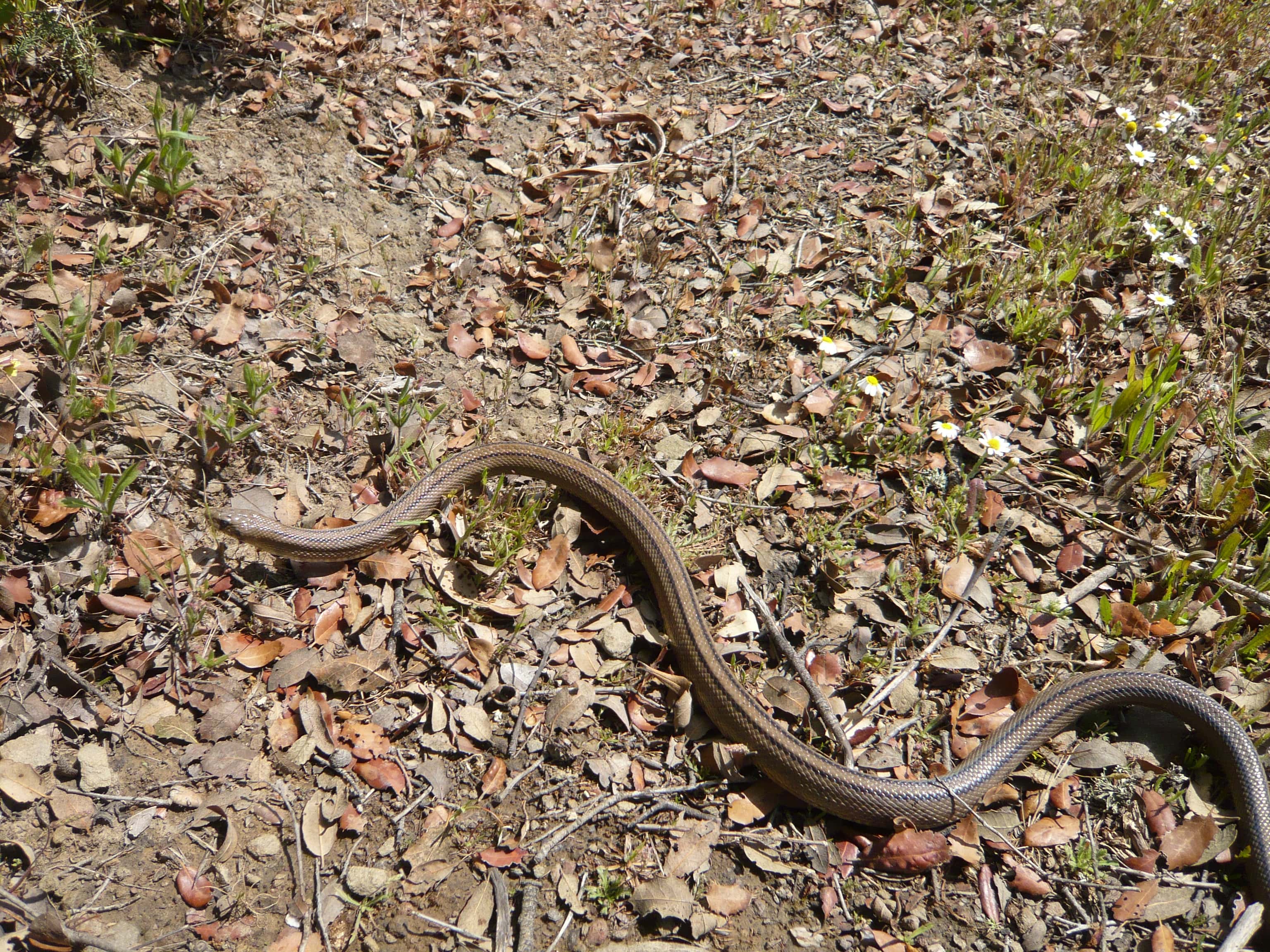
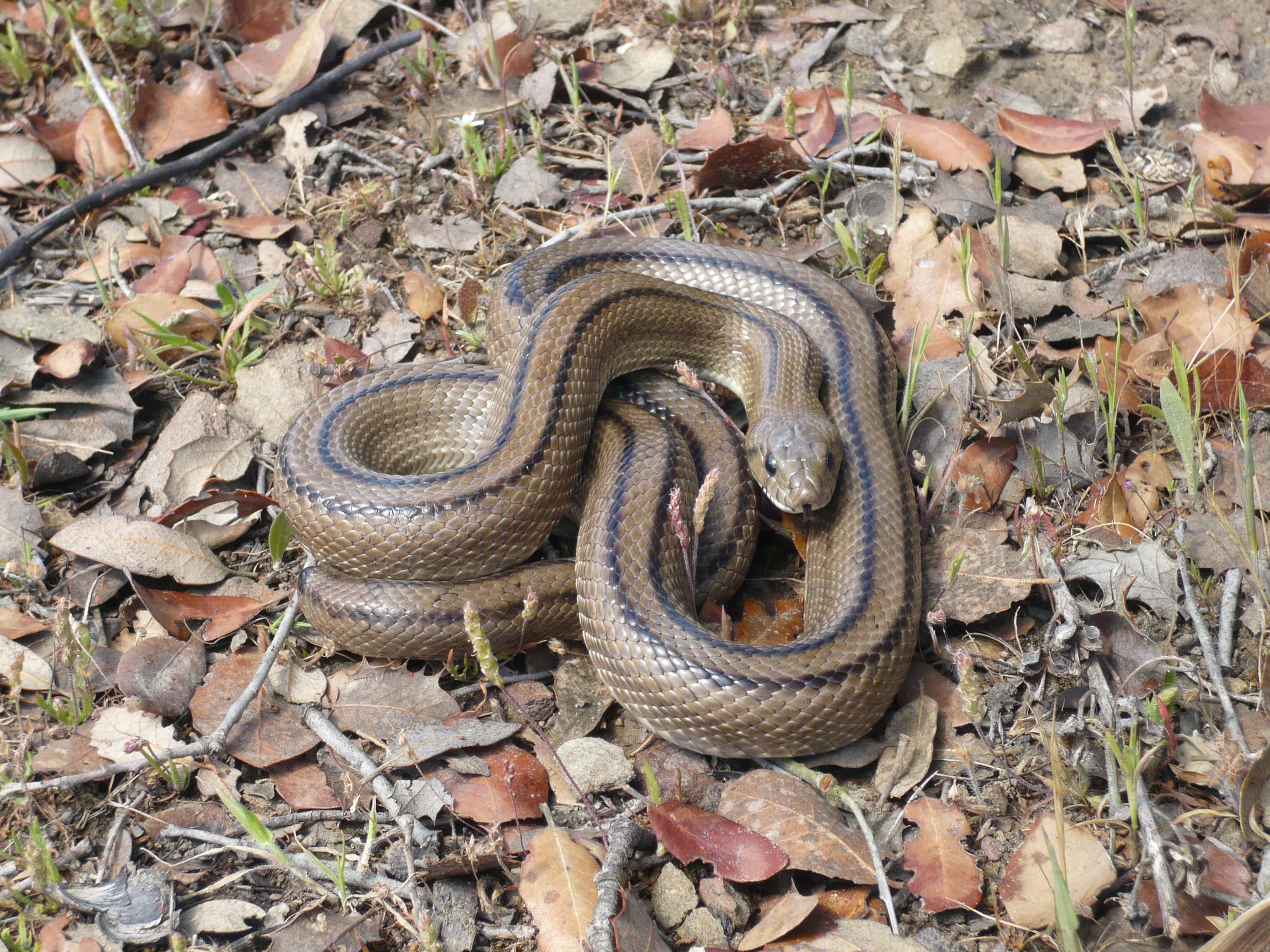
SCIENTIFIC NAME: Rhinechis scalaris
ORDER: Squamata
FAMILY: Colubridae
DIMENSIONS: Length: about 150cm
GENERAL DISTRIBUTION: It is distributed in the Iberian Peninsula, Northwest of Italy and Southeast of France. In Portugal, it is mainly found in the eastern half of the country and is most abundant in the Extremadura region.
With a long and slender body, it is a large snake that varies between 1.5m and 2m in length.
On the brownish, yellowish or rose-colored back, it has two dark longitudinal lines. In juveniles these lines are linked, giving the appearance of a ladder, hence their common name.
It may have daytime activity but is mostly active at night. In its nocturnal displacements this snake takes advantage of the heat retained by the asphalt of the roads, being therefore often victims of run over.
It is an aggressive species, which when disturbed can invest and even bite. However, your teeth do not have poison-producing glands, so your bite does not cause problems for humans.
STATUS OF CONSERVATION: Little Concern (LC)
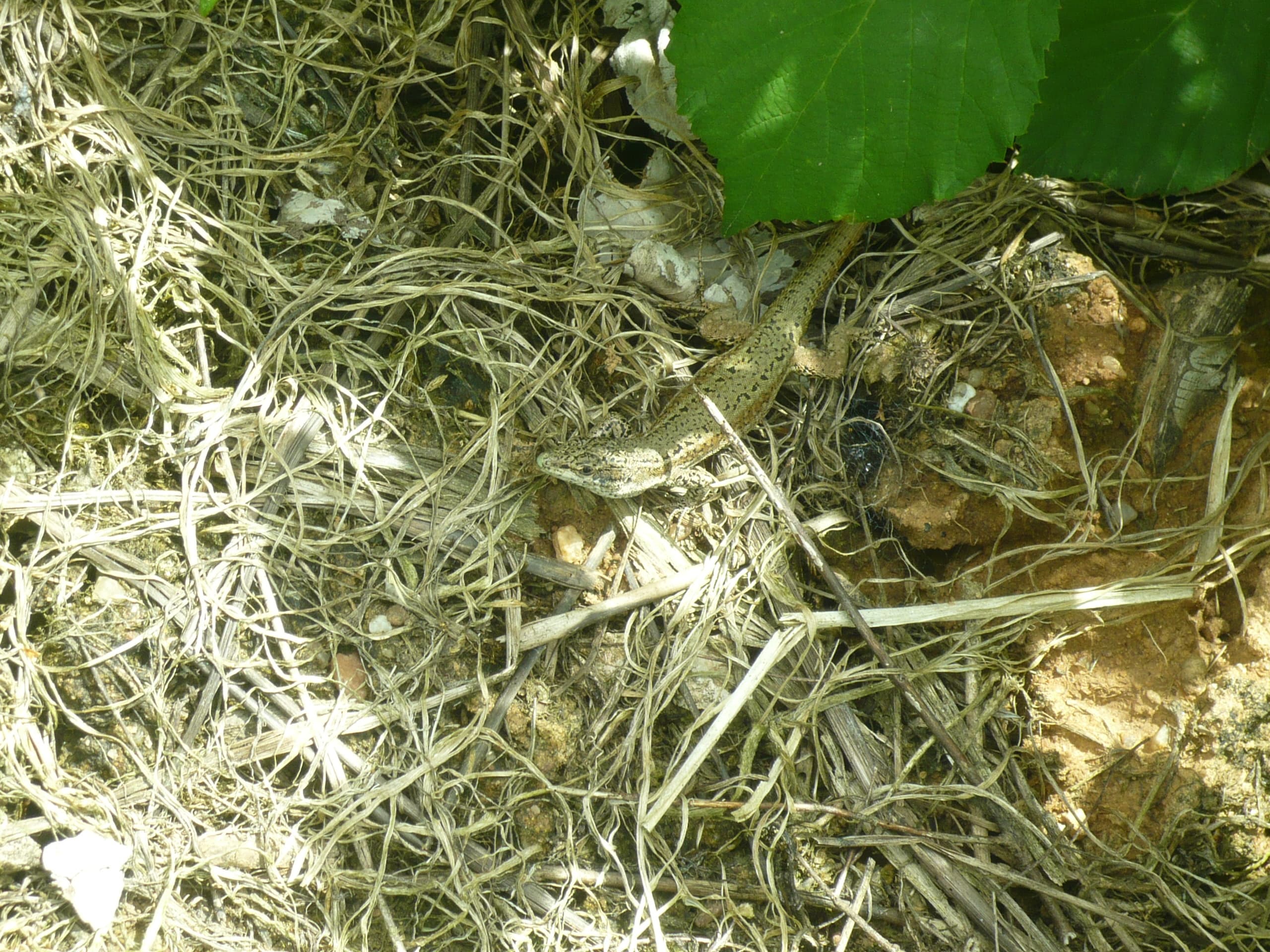
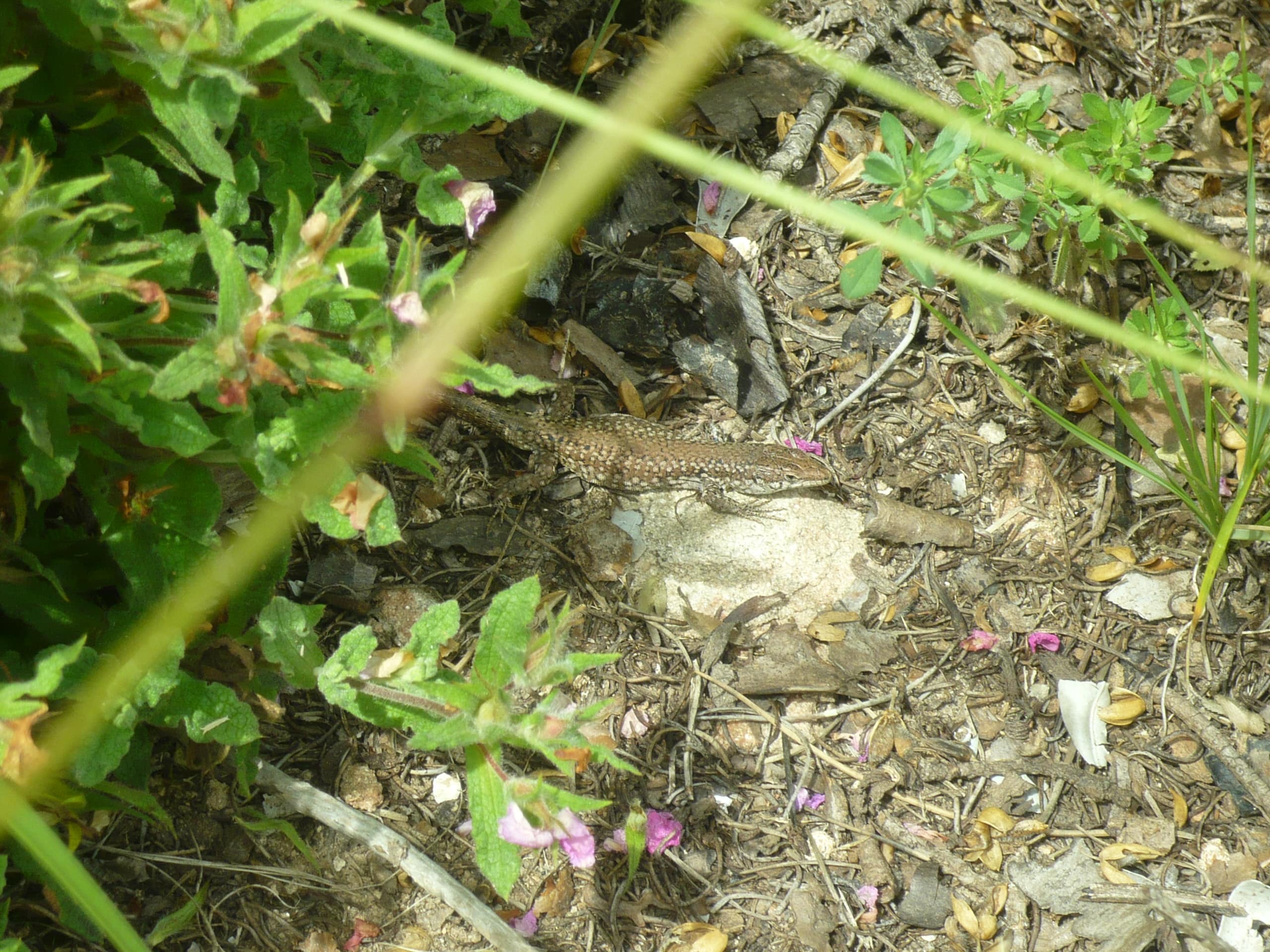
SCIENTIFIC NAME: Podarcis hispanica
ORDER: Squamata
FAMILY: Lacertidae
DIMENSIONS: Length: about 7cm (excluding tail)
GENERAL DISTRIBUTION: It is distributed throughout the Iberian Peninsula, Southeast of France and North Africa. In Portugal, it occurs throughout the territory.
It is a small lizard common in walls, heaps of stones and ruins, where it finds shelter. With a very variable coloration (ranging from light brown to intense green), it has a flat head and protruding orbits, which are identity characteristics of the species. On the sides, the presence of a darker, green, brown or black lace is common.
With about 18 cm of total length (including the tail, which comprises about two thirds of the length of the animal), in danger of releasing the tail (a phenomenon called autotomy).
It is active almost throughout the year, provided the temperature is above 13ºC. It reaches maximum activity in the spring, with its body temperature between 26 and 41ºC, absorbing it from the rocky substratum where it lies.
In this species the sexual dimorphism is perceptible to the level of the size, being the males greater than the females. Usually do not live more than 3 years.
STATUS OF CONSERVATION: Little Concern (LC)
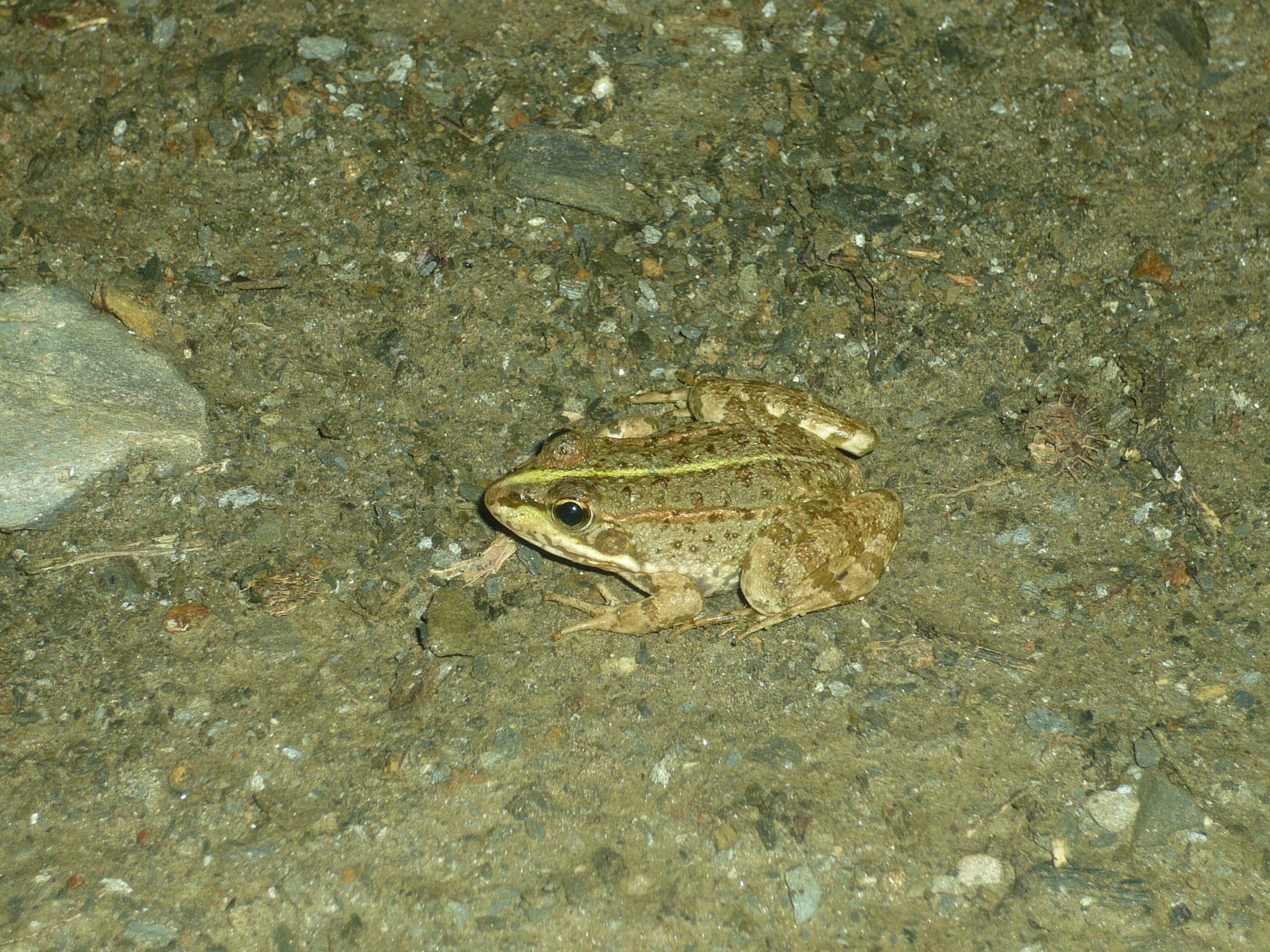
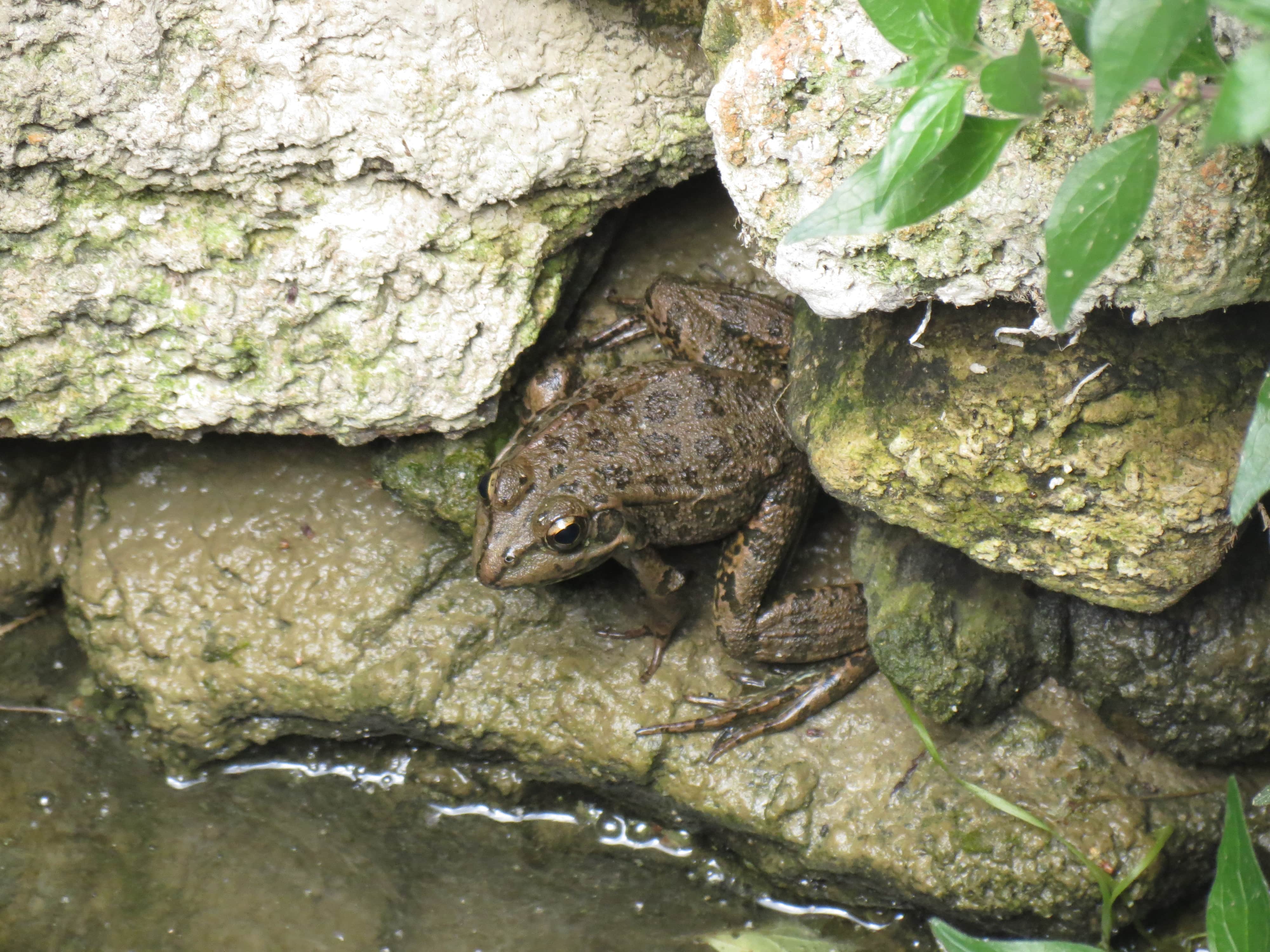
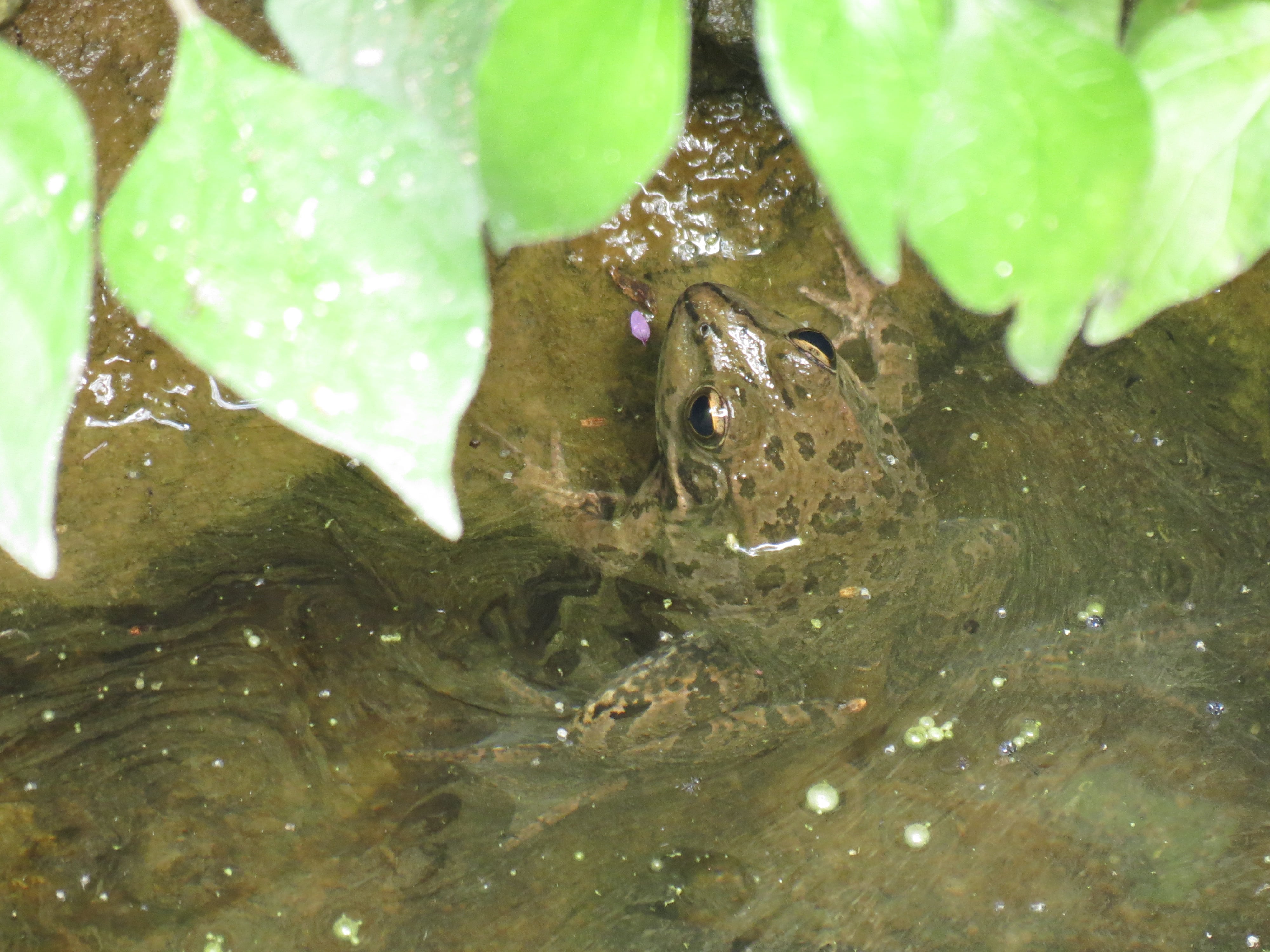
SCIENTIFIC NAME: Pelophylax perezi
ORDER: Anura
FAMILY: Ranidae
DIMENSIONS: Length: 5-10cm (sometimes a little more in females)
GENERAL DISTRIBUTION: It occurs throughout the Iberian Peninsula reaching its northern boundary in the South of France.
It is the most frequent amphibian in Portugal and can live up to 10 years!
Excellent swimmer and jumper, is capable of jumping with more than 2 m. At night or in conditions of great humidity, you can move far enough away from the water in search of food.
The size varies between 5 and 10 cm, being sometimes a little more in females. The back, usually green, but also brownish or grayish, has a pale green or yellow vertebral line and two yellowish or brownish lateral "wrinkles".
It has a pointed muzzle and big eyes, very close together and prominent, golden and with horizontal pupil.
It remains active throughout the year except during cooler times, when it is buried in the mud or between aquatic vegetation.
STATUS OF CONSERVATION: Little Concern (LC)
SCIENTIFIC NAME: Pleurodeles waltl
ORDER: Urodela
FAMILY: Salamandridae
DIMENSIONS: Length: about 30cm (or more)
GENERAL DISTRIBUTION: In Europe, it lives exclusively in the center and south of the Iberian Peninsula, also occurring in the Northeast of Morocco.
The general appearance of this salamander seems primitive or somewhat grotesque.
It is the largest amphibian in Portugal, and adults can exceed 30 cm in length.
The body and head are flattened, and the tail, as long as the rest of the body, is flattened laterally. The coloration varies between brownish ocher and grayish tones.
On each side of the trunk is visible a line of glandular protrusions of very bright yellow-orange tone, that coincide with the extremes of the ribs and that segregate toxic substances. When faced with a threat this salamander makes the ribs protrude. This ability is defensive and is only used when the animal realizes that it is in danger.
Its life cycle depends on the type of water bodies in the area where it lives. In the wetter zones it occupies any type of puddle, tank, well or streams, where possible if passing the whole year as an aquatic animal. If the waters dry in the summer, it can stretch for months, buried in moist soil.
STATUS OF CONSERVATION: Little Concern (LC)
NAME SCIENTIFIC: Timon lepidus
ORDER: Squamata
FAMILY: Lacertidae
DIMENSIONS: Length: 15-26cm (excluding tail)
GENERAL DISTRIBUTION: It occurs in the Iberian Peninsula, western border and Southeast of France and Northwest of Italy. In Portugal, it is present throughout the territory.
It is the most common lizard in Portugal and the largest in the Iberian Peninsula, being able to reach 90 cm in length, two thirds of which correspond to the tail.
The head is large and sturdy, and the back is greenish. The male has several blue dots on the sides (which we call "ocelli") and the female few or none.
It is active in the mildest months of the year, hibernating between autumn and winter.
The breeding season extends during the spring, when males are territorial and engage violent fights between them.
At the peak of heat, it seeks shelter to escape from high temperatures, and is then active overnight.
In case of danger, escape is always the first option, but when cornered it adopts a defensive position: it raises the head and opens much the mouth, being able to even jump against the enemy and to bite.
Although they can live to the age of 11, these lizards have a high death rate because they take advantage of the heat trapped by road asphalt to warm up.
STATUS OF CONSERVATION: Not Reviewed (NE)
SCIENTIFIC NAME: Pelodytes sp.
ORDER: Anura
FAMILY: Pelodytidae
DIMENSIONS: Length: 3-4,5cm
GENERAL DISTRIBUTION: It is suspected that in this region of Southwest Portugal the Pelodytes belong to a genetic line distinct from the typical form (P. punctatus) that is distributed in the western half of Portugal and eastern part of Spain entering through the South of France above. The related species P. ibericus is thus distributed in the South-West of the Iberian Peninsula, it is not known exactly where the border between both species occurs.
It is a small frog with the appearance of a small frog, the females being slightly larger than the males.
The head is flat and the muzzle is rounded. The eyes, protruding and large, are golden and have a vertical pupil.
As the name suggests has numerous greenish-colored warts, both on the back and legs.
Essentially terrestrial and nocturnal, he jumps around in the vicinity of his hiding place to catch insects and spiders. For this it has the previous paws long, being those of the males stronger than those of the females.
The breeding season can begin as early as late autumn, when this species adopts more diurnal habits and approaches the place with the nearest water.
By this time, males croak in water or near tufts of vegetation. Although small, these have a strong croaking consisting of two notes: a rising sound "huah!" Followed by a descending "graaah" sound that repeats two or more times.
STATUS OF CONSERVATION: Little Concern (LC)
SCIENTIFIC NAME: Epidalea calamita
ORDER: Anura
FAMILY: Bufonidae
DIMENSIONS: Length: 5-9cm
GENERAL DISTRIBUTION: It extends from the Iberian Peninsula to Central and Eastern Europe.
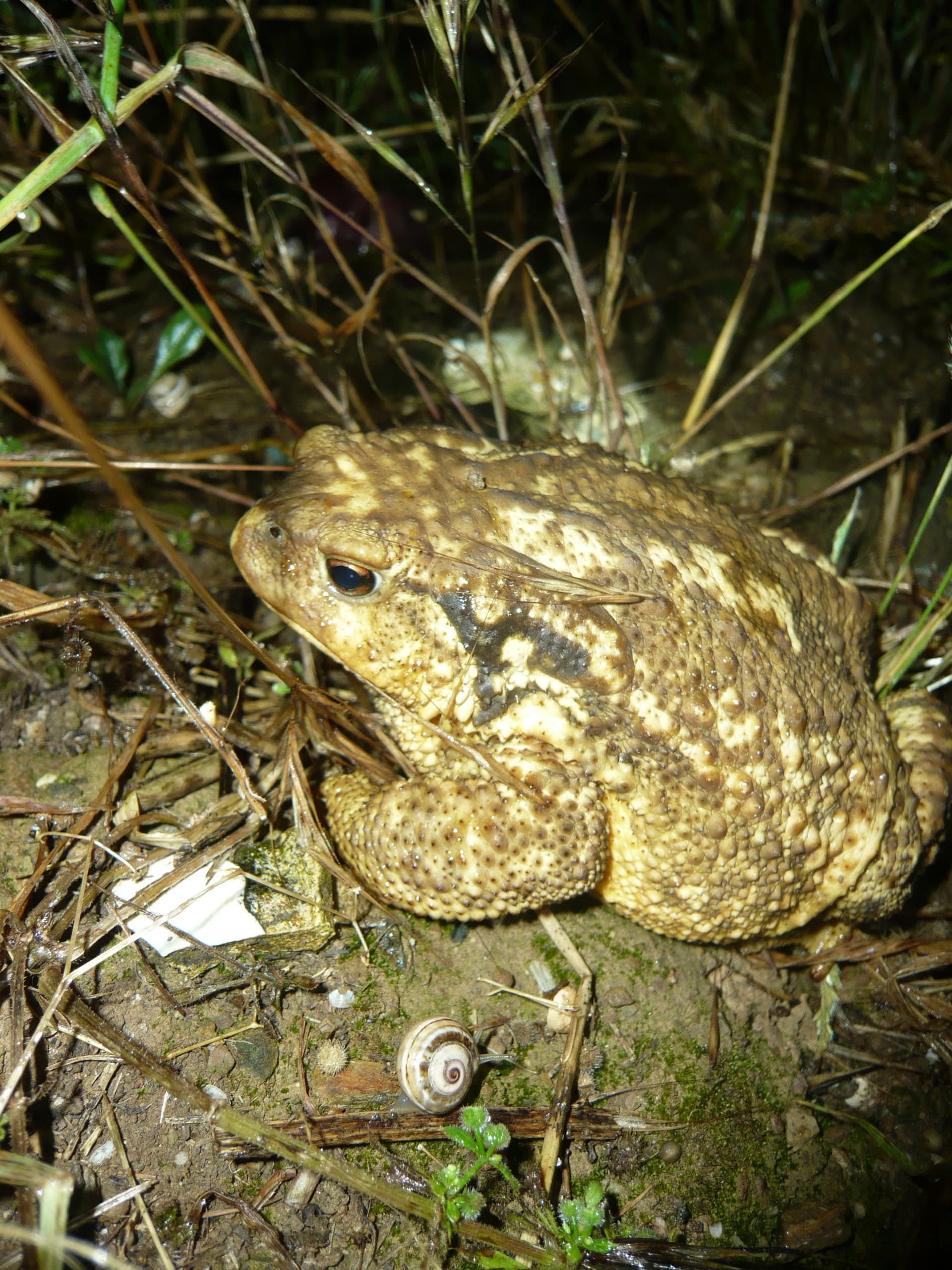
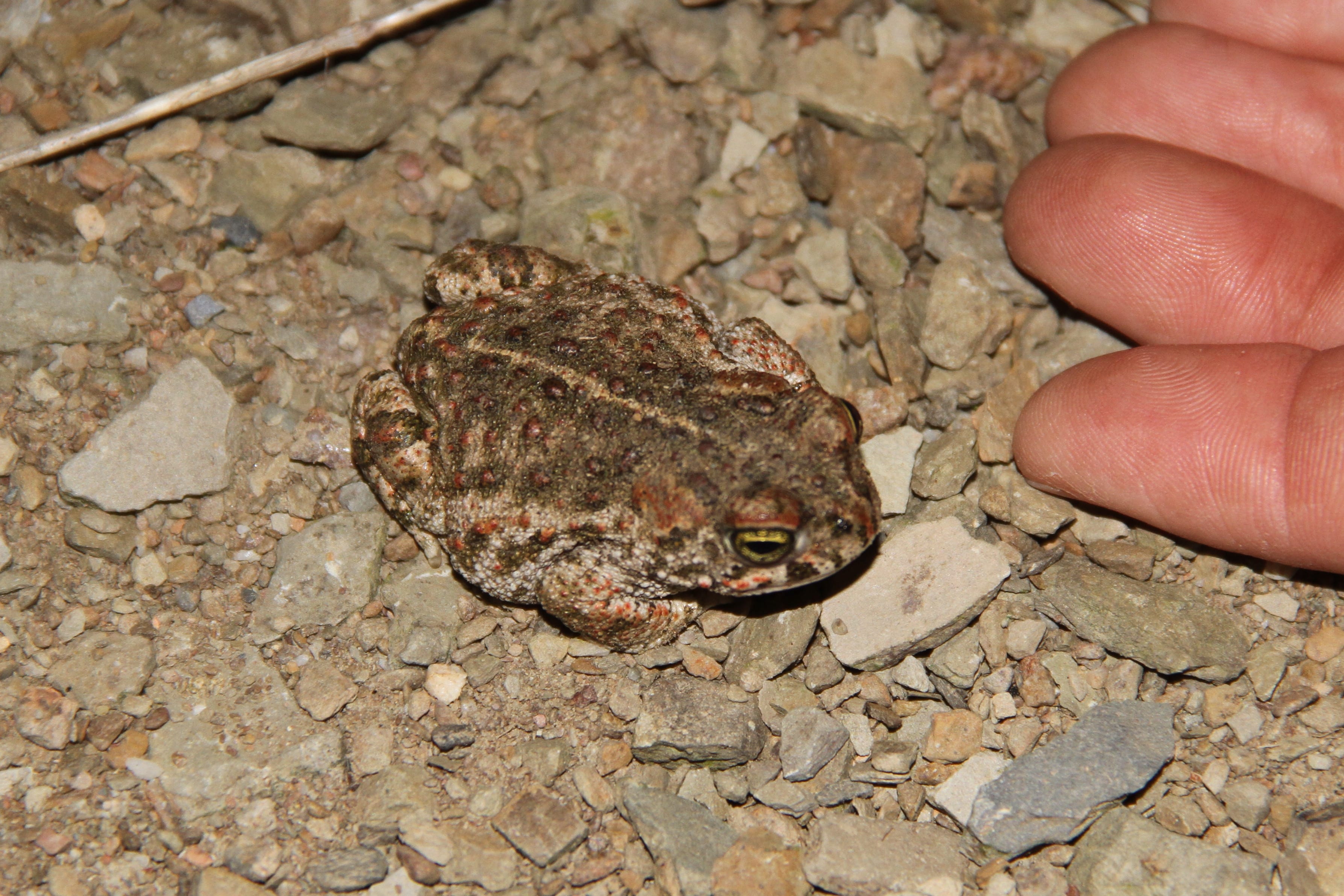
It has a robust aspect, rounded head, broader than long and relatively large, prominent eyes, with horizontal pupil. The size is similar in both sexes, ranging from 5 to 9 cm.
The skin has large flattened warts and a very variable coloration between the grayish or greenish. In the middle dorsal region (of the back) there is usually a longitudinal yellow or green line.
With rather terrestrial habits, he spends the day under stones or in galleries which he himself digs with the aid of his rather hard fingers. He leaves at night to go through his territory in search of prey, moving through small races, a characteristic that gives rise to his common name
In the breeding season it goes back to the same place year after year to mate. However, some males can visit different areas, thus obtaining a higher breeding success.
Contrary to other species, which spend the entire breeding season near water and croaking, Frog-runner has an explosive reproductive behavior. After heavy rain, males and females concentrate to mate in only one or two nights.
STATUS OF CONSERVATION: Almost Threatened
SCIENTIFIC NAME: Alytes cisternasii
ORDER: Anura
FAMILY: Discoglossidae
DIMENSIONS: Length: 3,5-4,5cm
GENERAL DISTRIBUTION: Species endemic to the Center and Southwest of the Iberian Peninsula. In Portugal it appears mainly in the regions south of the Tagus.
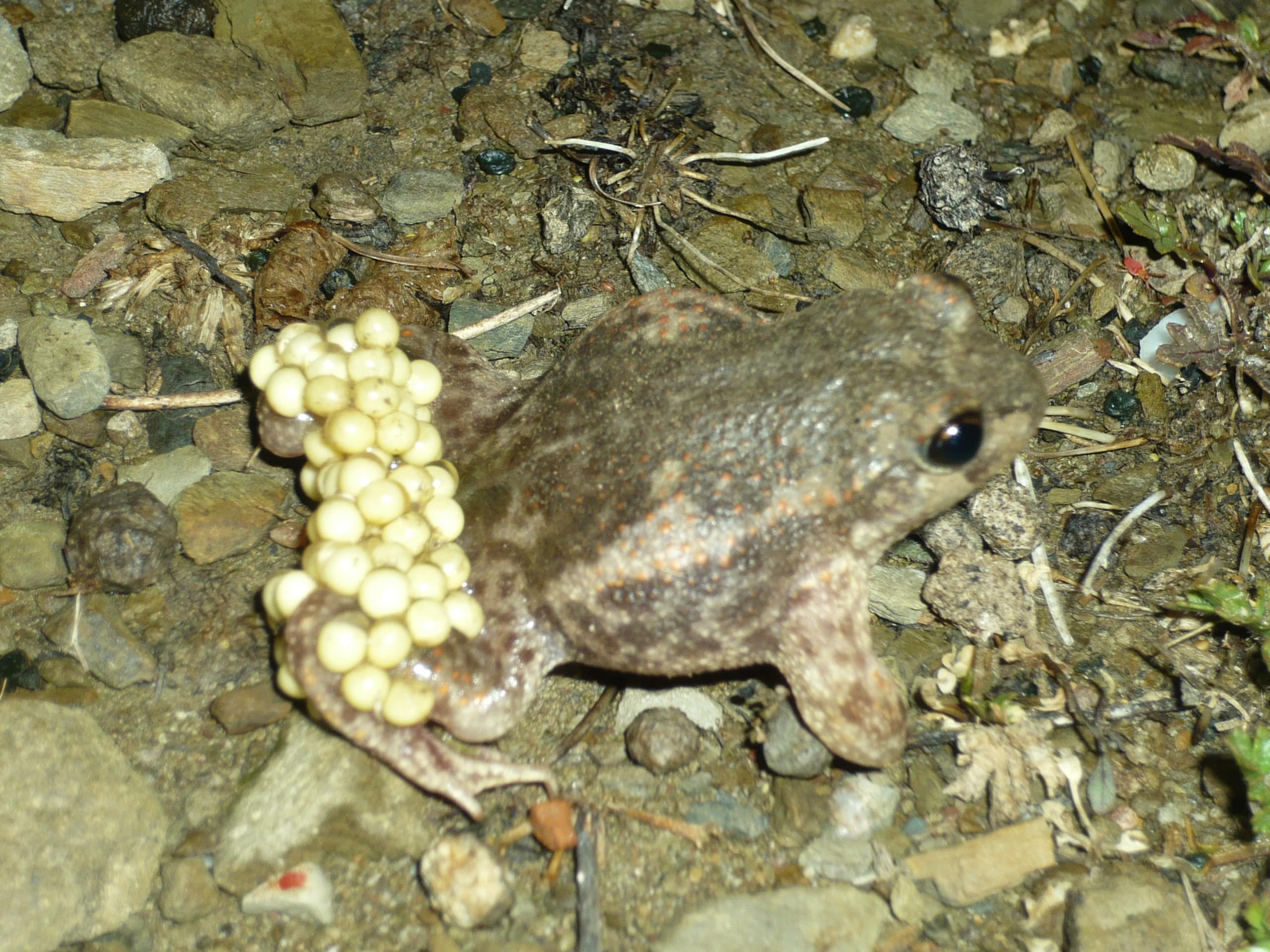
It is known for the male carrying the eggs on the back, a characteristic that resulted in his common name. Of robust appearance, adults do not exceed 3.5 to 4.5 cm in length.
This small toad only exists (it is endemic) in the Center and Southwest of the Iberian Peninsula. In Portugal it appears mainly in the regions south of the country.
The head is short and broad, the paws and fingers are short and the eyes are prominent, of golden color and vertical pupil. Each front leg has two well-visible "calli", a characteristic that distinguishes them from the other species of toad in Portugal.
Usually the dorsal skin is reddish brown, with numerous darker spots and very characteristic red-hot warts.
During the dry season he spends time asleep in a hole he himself digs into the ground or between stones of walls and ruined houses. As soon as the first autumn rains fall, he leaves his hiding place, almost always at night, looking for insects, spiders and slugs. Soon the males songs begin to be heard, a short, monotonous whistle.
STATUS OF CONSERVATION: Little Concern (LC)
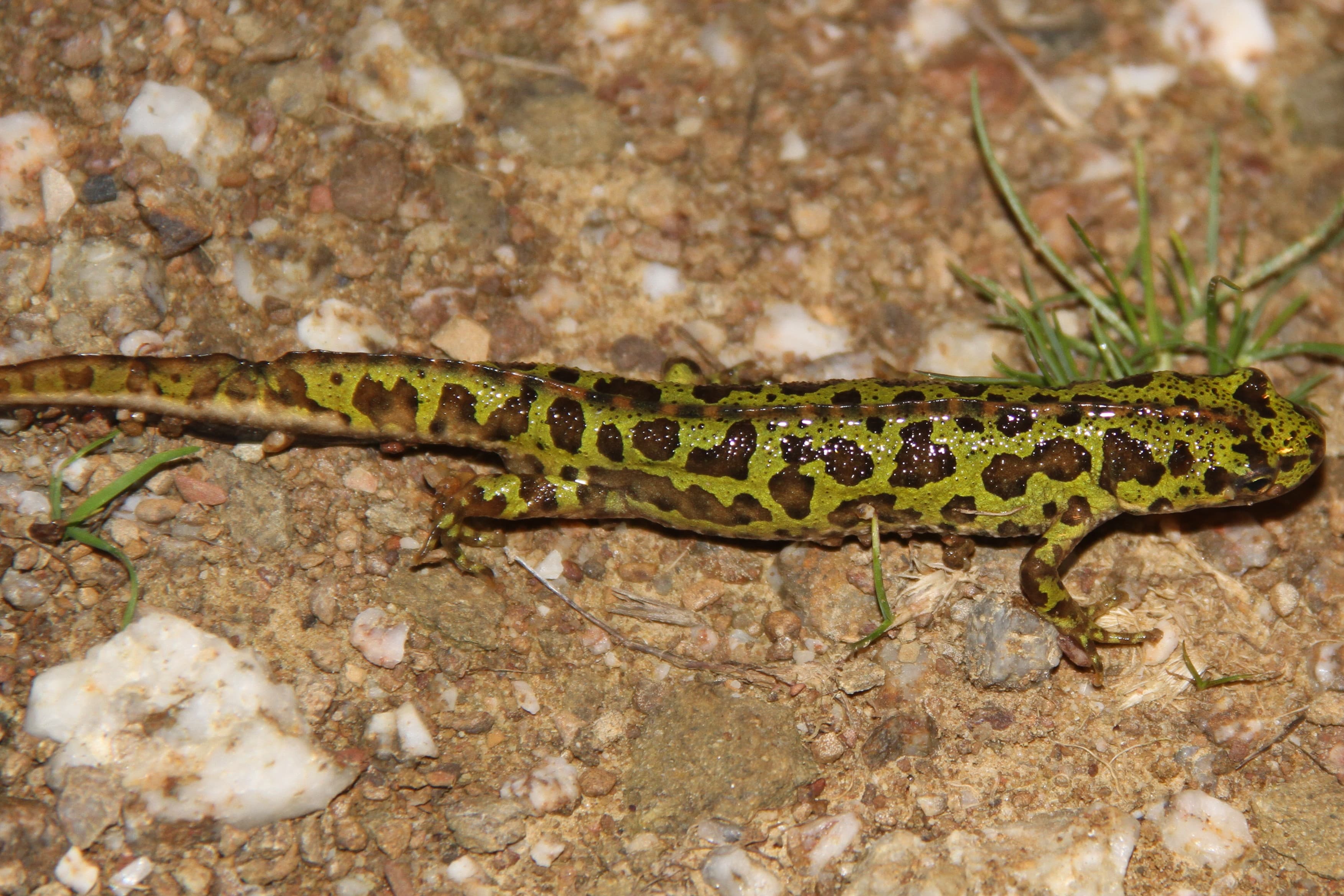
SCIENTIFIC NAME: Triturus pygmaeus
ORDER: Urodela
FAMILY: Salamandridae
DIMENSIONS: Length: 9-11cm (can reach 16cm)
GENERAL DISTRIBUTION: Iberian Peninsula (except southeast) and central and western France. The Algarve subspecies (Triturus marmoratus pygmaeus), which some authors consider as a true species (Triturus pygmaeus), is endemic to the Southwest and central Iberian Peninsula.
It is the largest triton that exists in Portugal, having 7.5 to 12.5cm from the muzzle to the tip of the tail.Elegant and soft-skinned, it is relatively easy to find in low flowing water bodies during the breeding season, being more active at night.Males are smaller than females and during the breeding season show a "ridge" along the back that extends through the tail.The breeding season depends on both the weather and the region. In Castro Verde it usually occurs from the first autumnal rains.


CEAVG - Centro de Educação Ambiental do Vale Gonçalinho
(LPN - Liga para a Protecção da Natureza)
Apartado 84
7780-909 Castro Verde
Contacts
PH.: 286 328 309 / 286 322 246 / 968 523 648
Fax.: 286 328 316
E-mail: lpn.cea-castroverde@lpn.pt
GPS Coordinates: Latitude - 37°44´11.03"N; Longitude - 8°1´53.79"W
Working hours
Tuesday to Saturday, from 9h to 13h and from 14h to 18h.
Closed on Sundays, Mondays and Holidays.
 HOW TO GET THERE







Collaborate with us

Follow us on Social Networks


